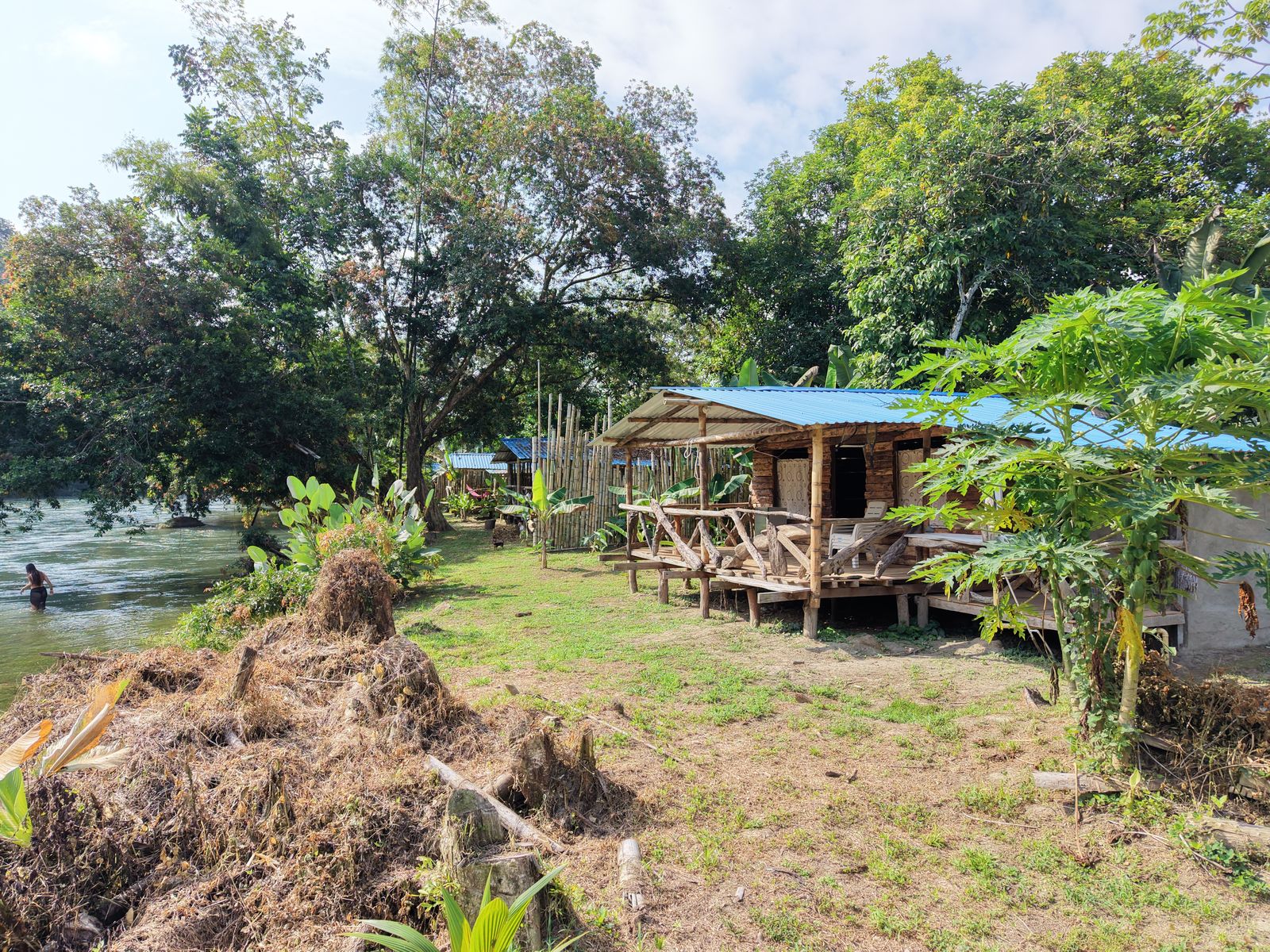
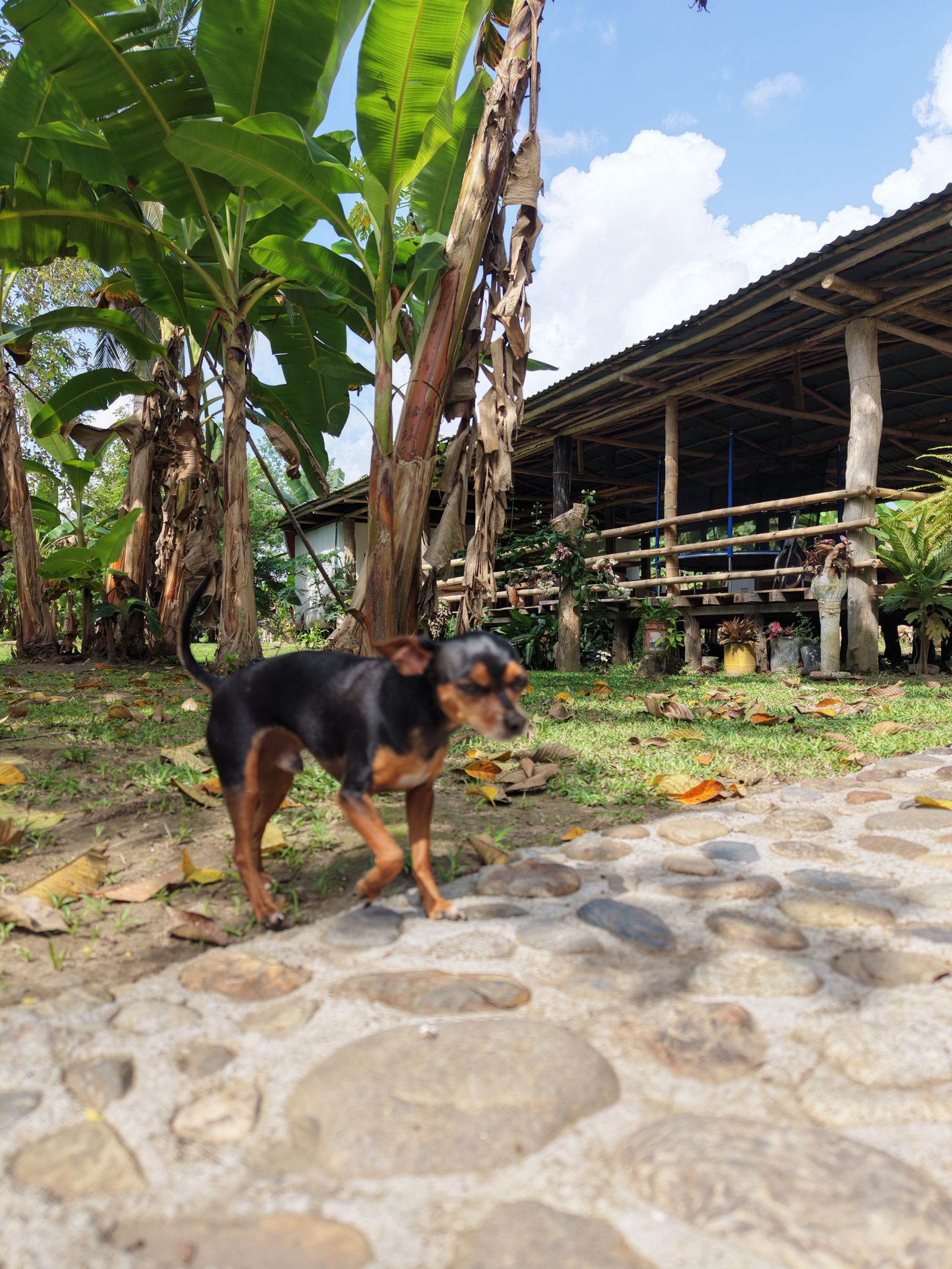
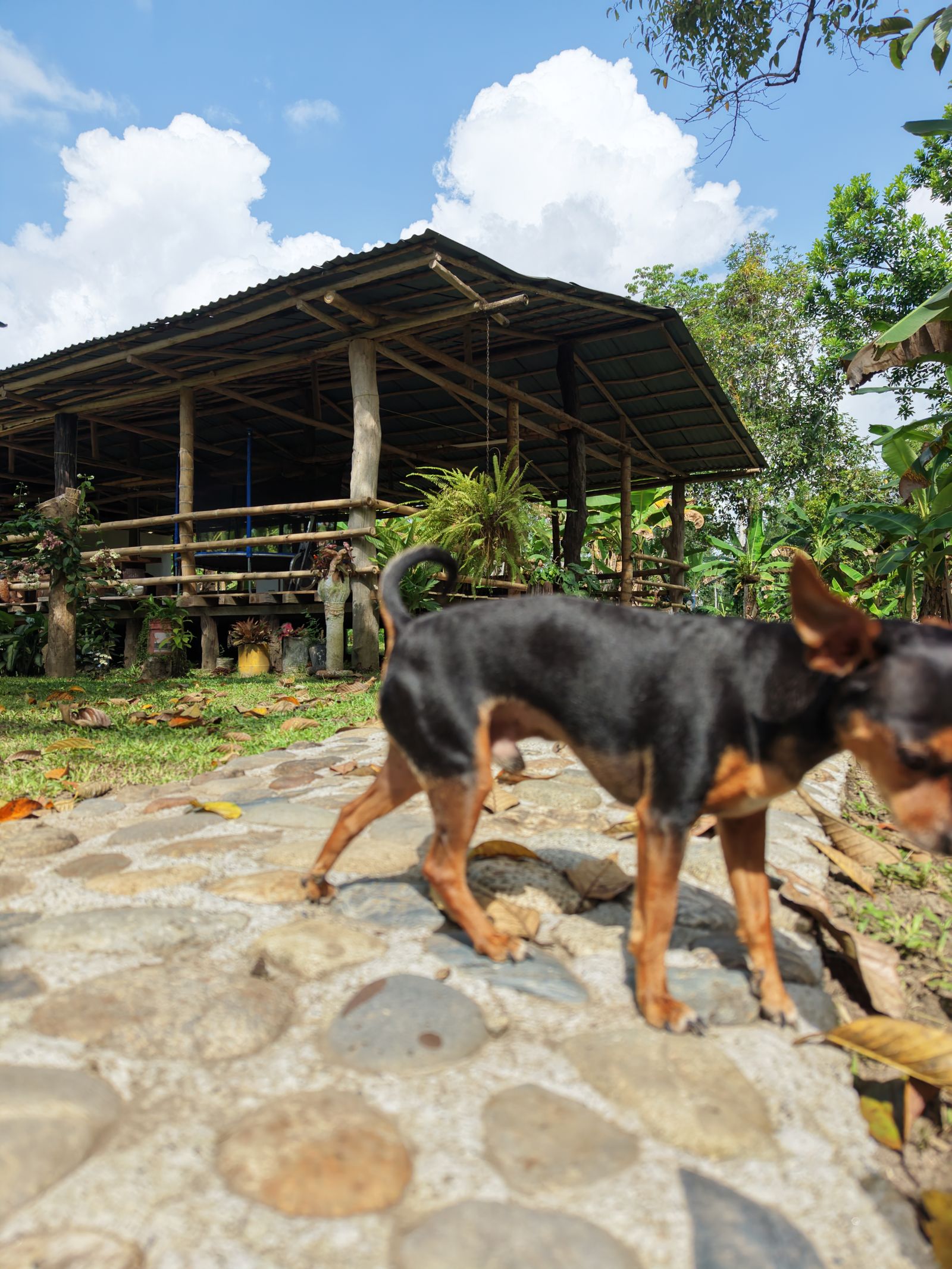
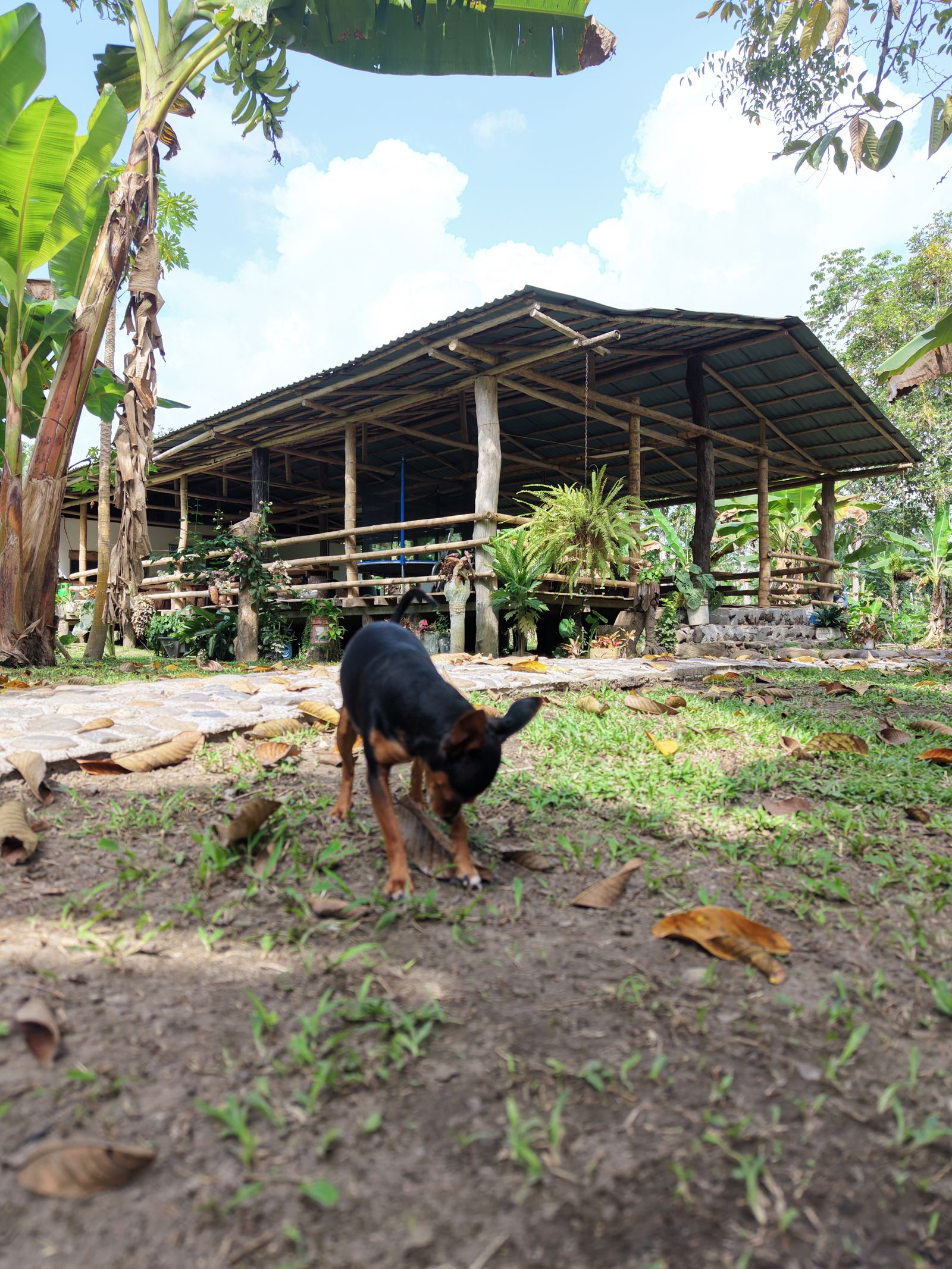
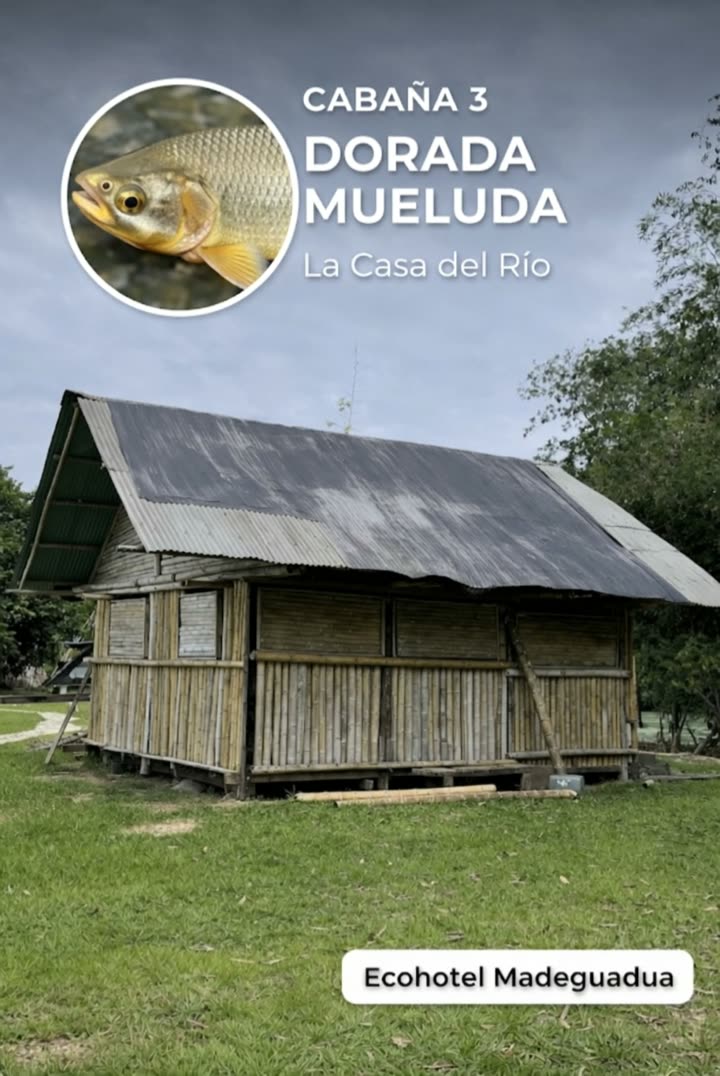
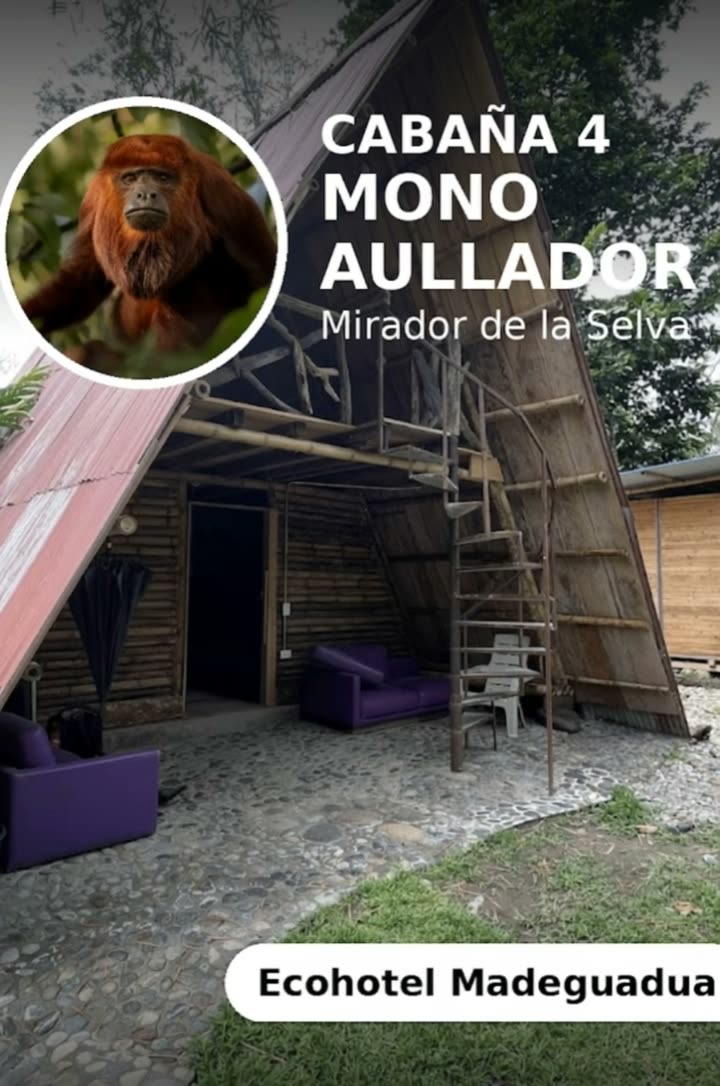
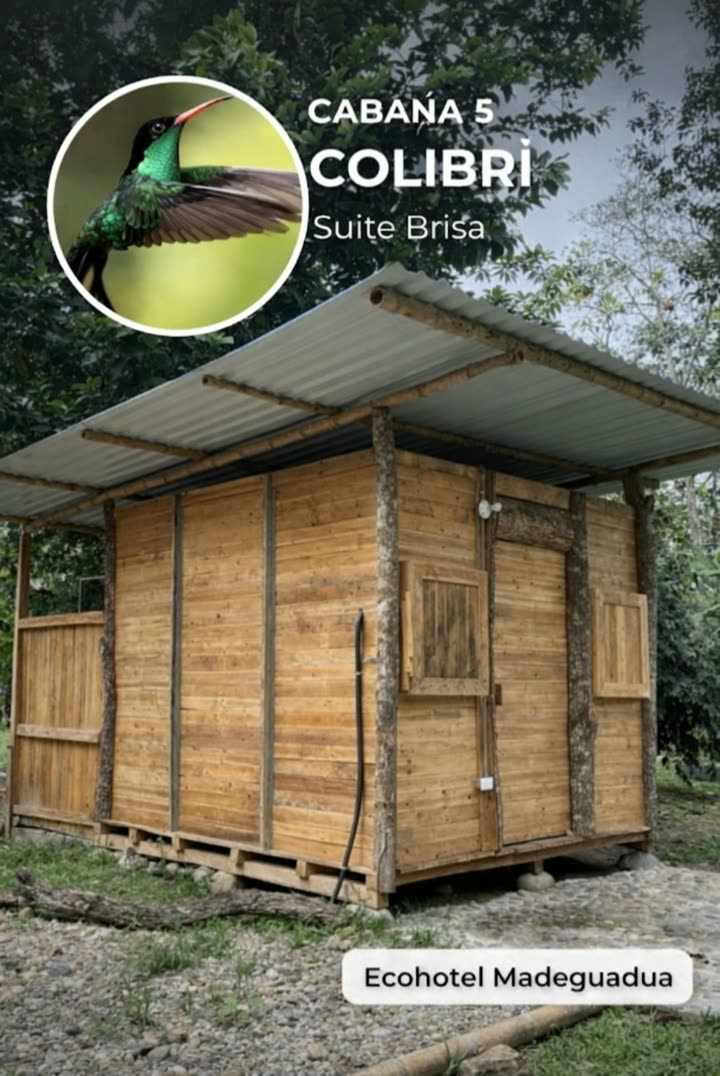
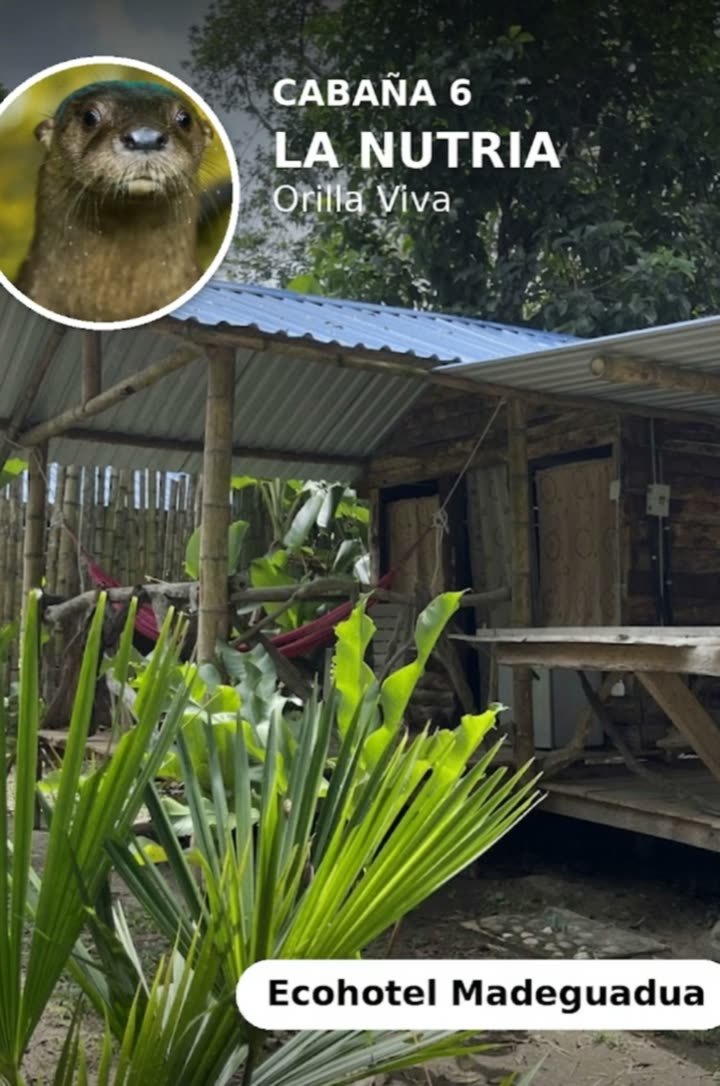
Fourteen bamboo cabins on the La Miel River, on a bend you can only reach by boat. You sleep to the sound of the water and wake to the birds of the canyon.
Fourteen bamboo cabins on the bank of the La Miel River, each one named after an animal of this territory. You get here by boat across the river from the Muelle La Miel dock — and from there on, the only noise is the water and the forest.
The place
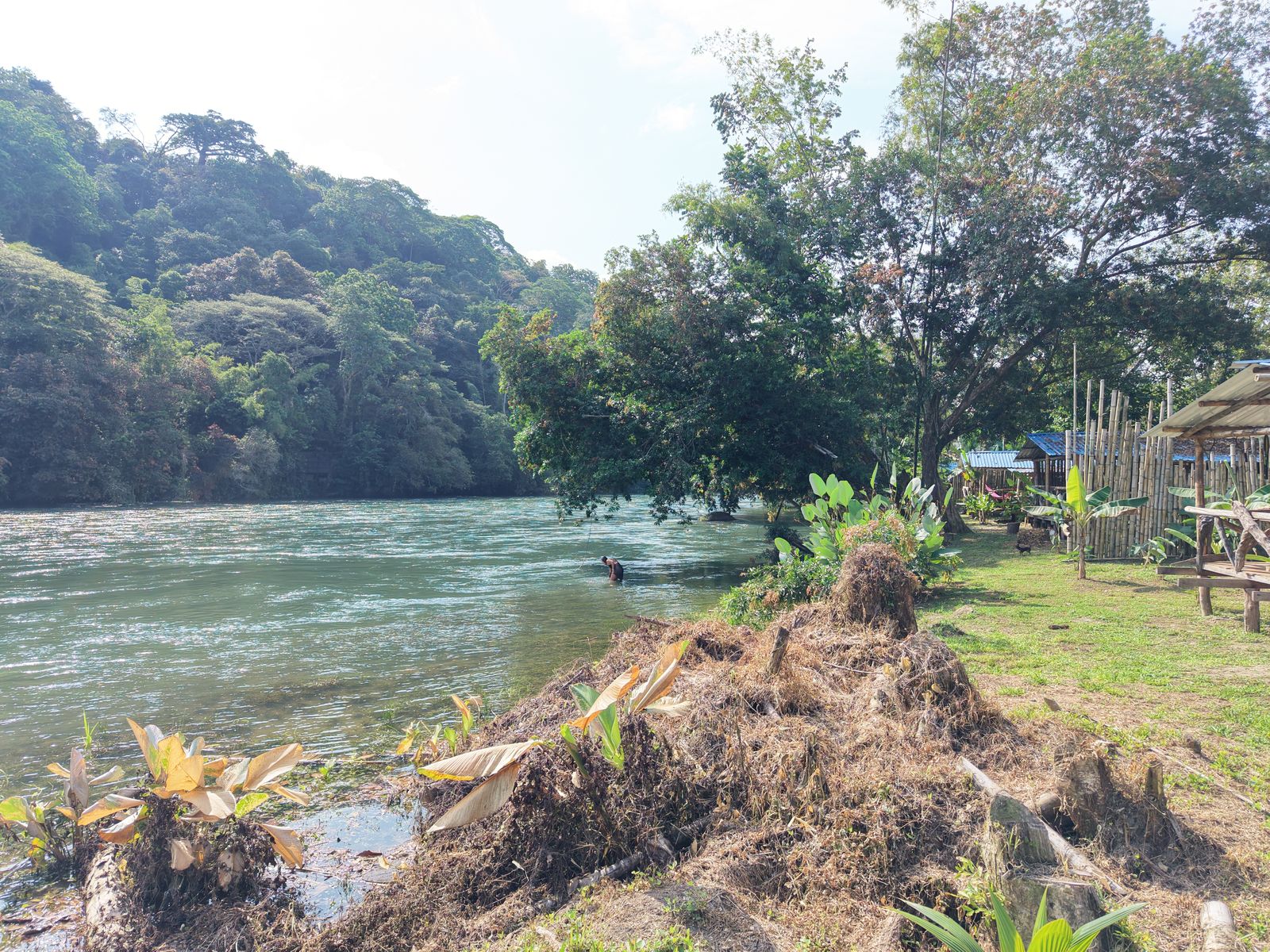
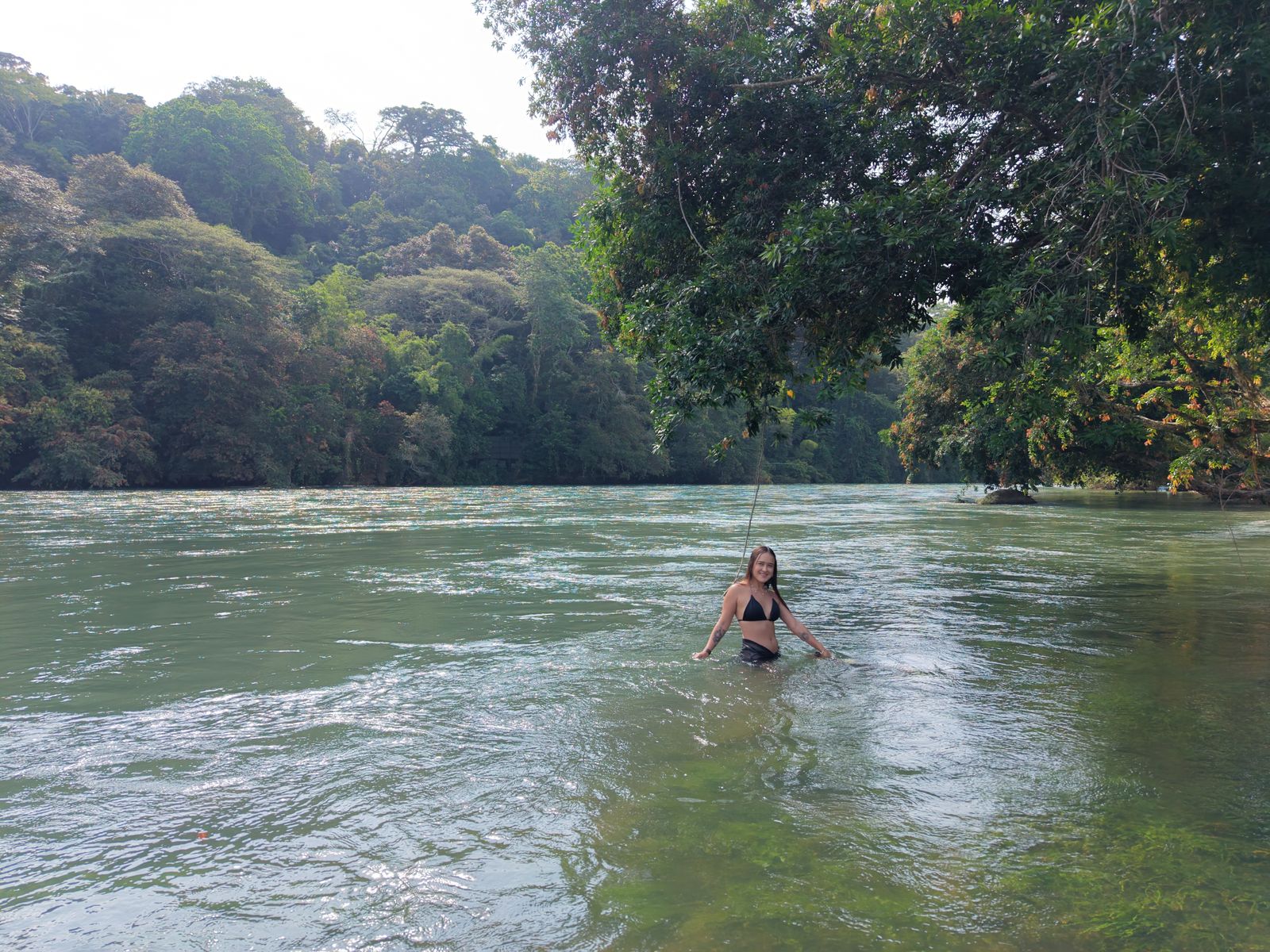
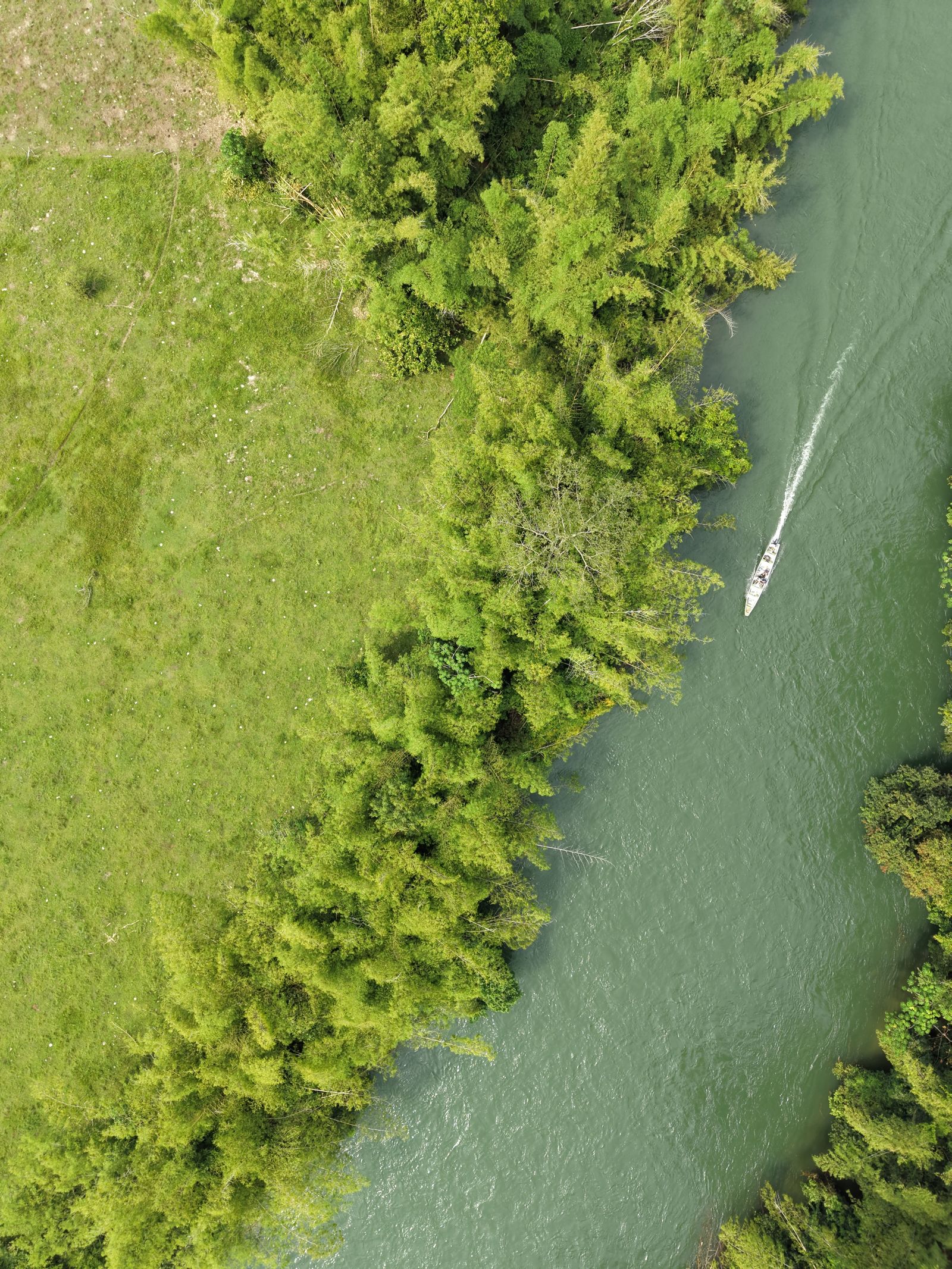
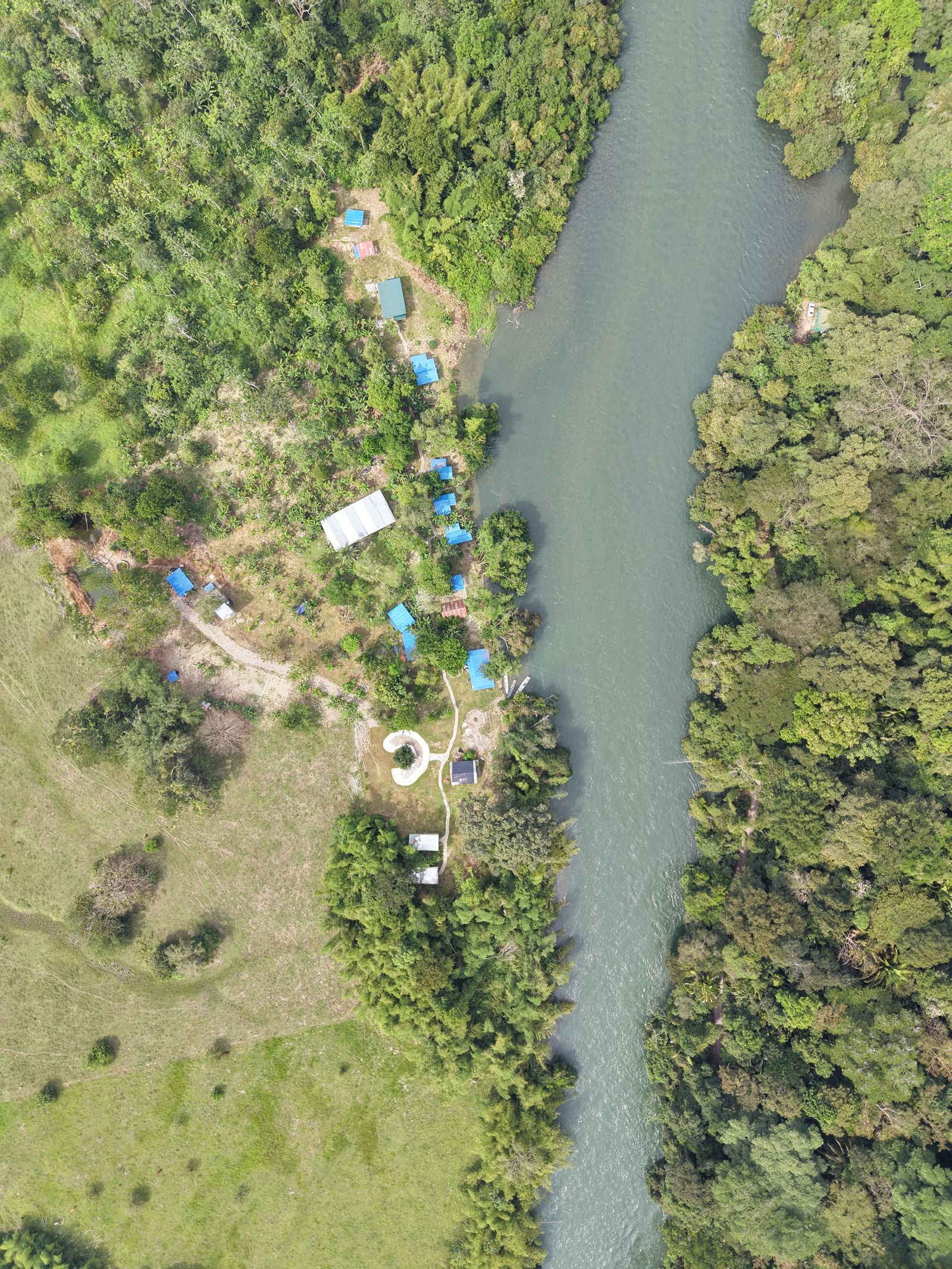
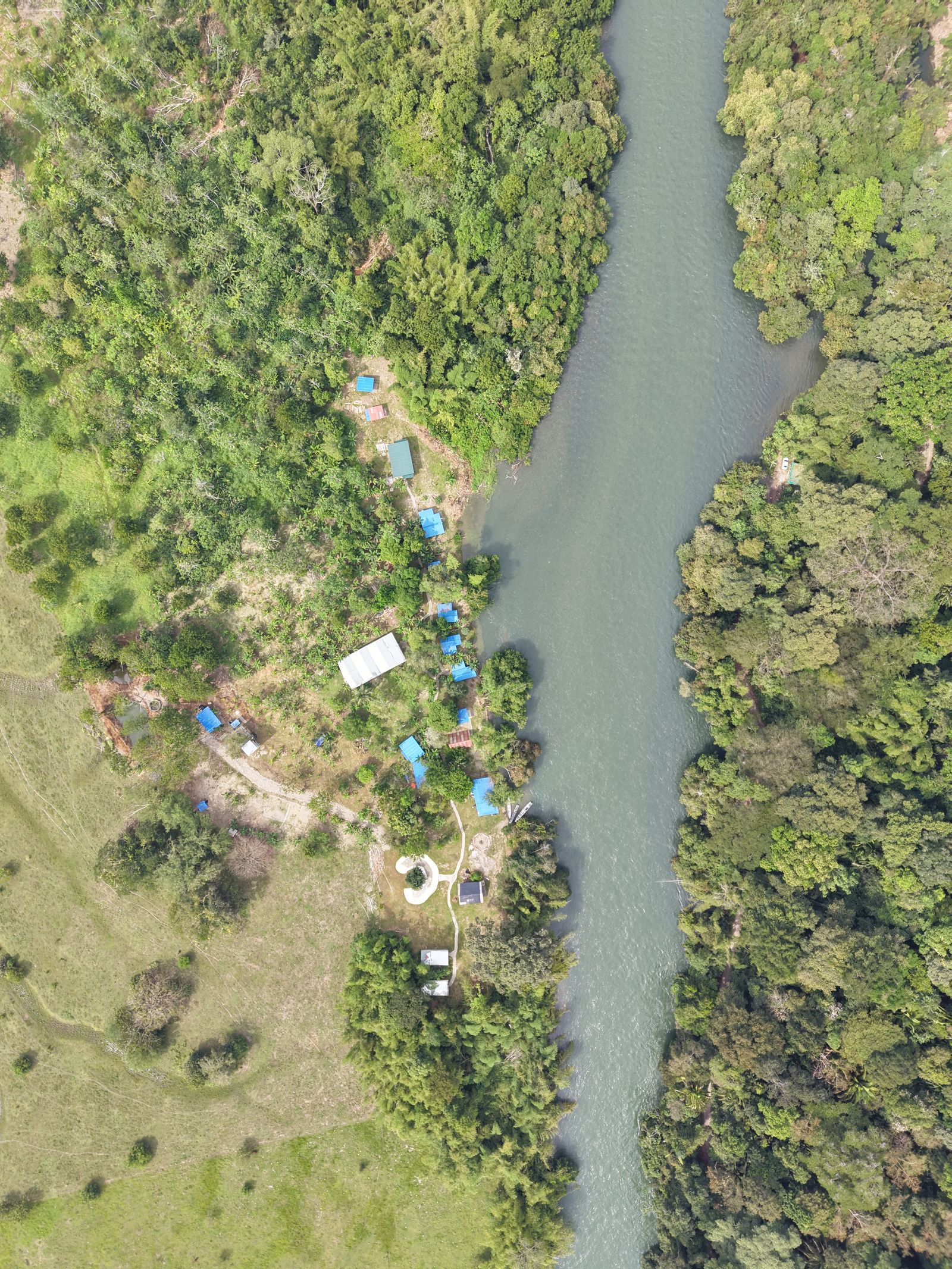
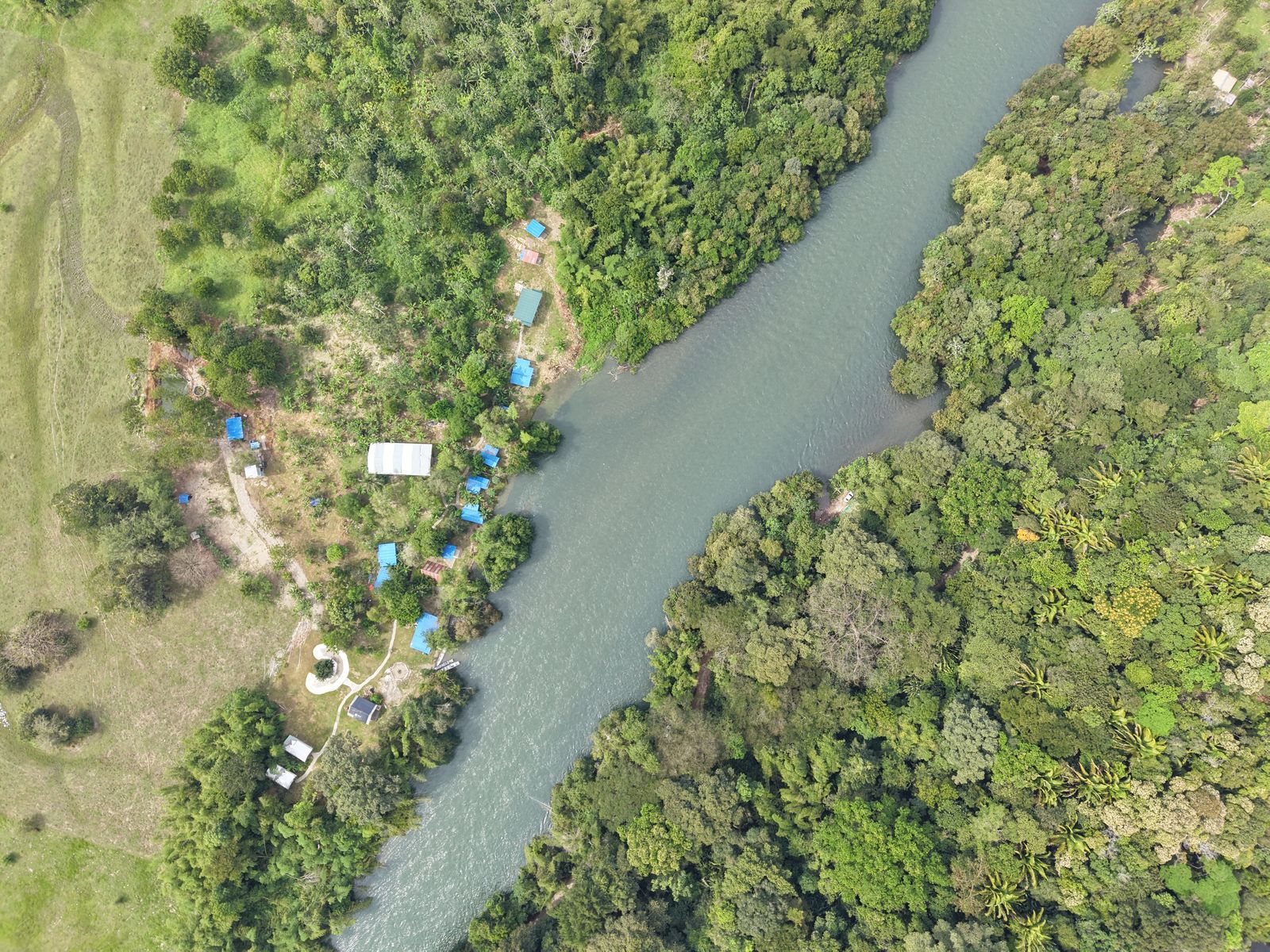
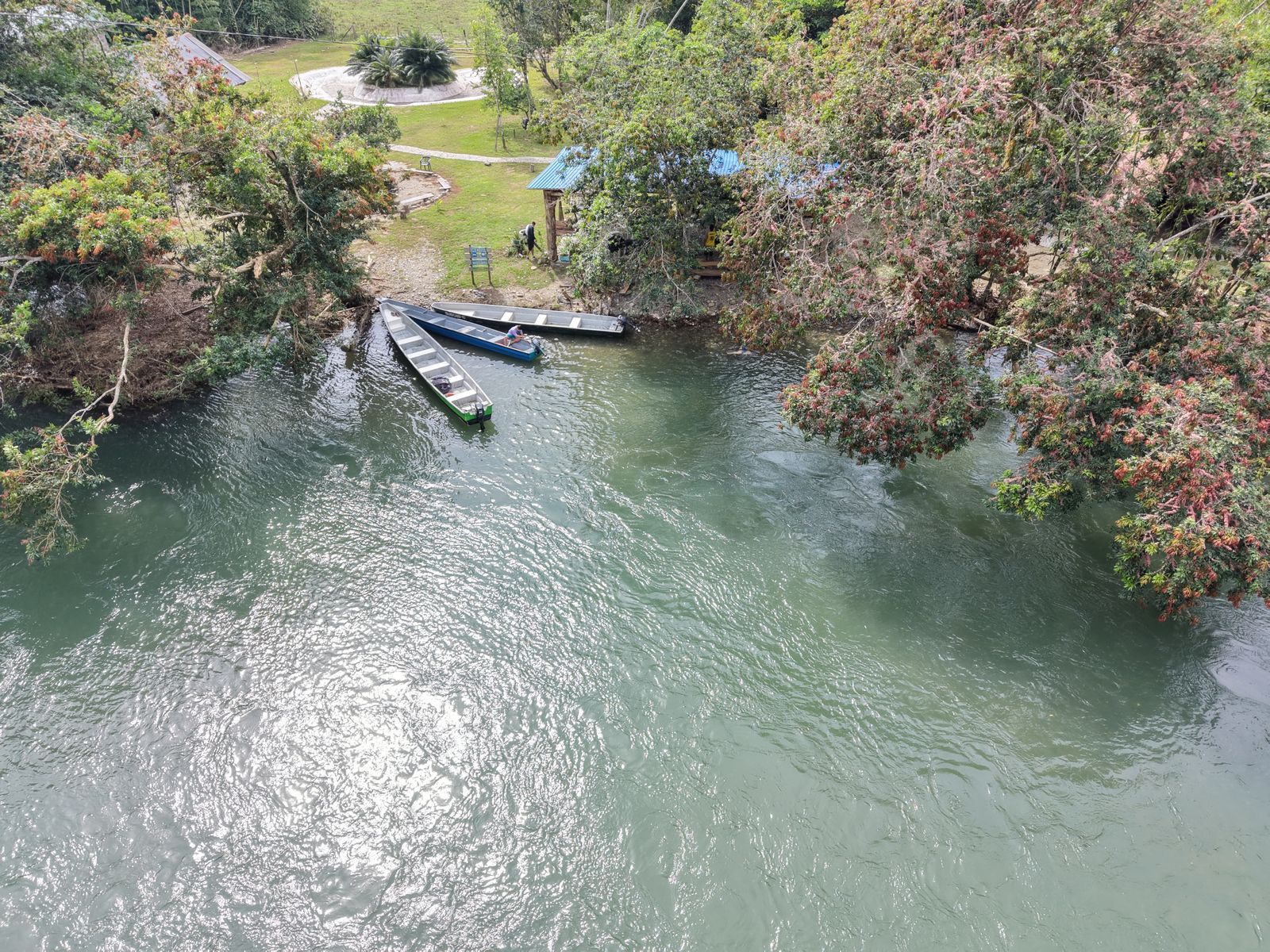
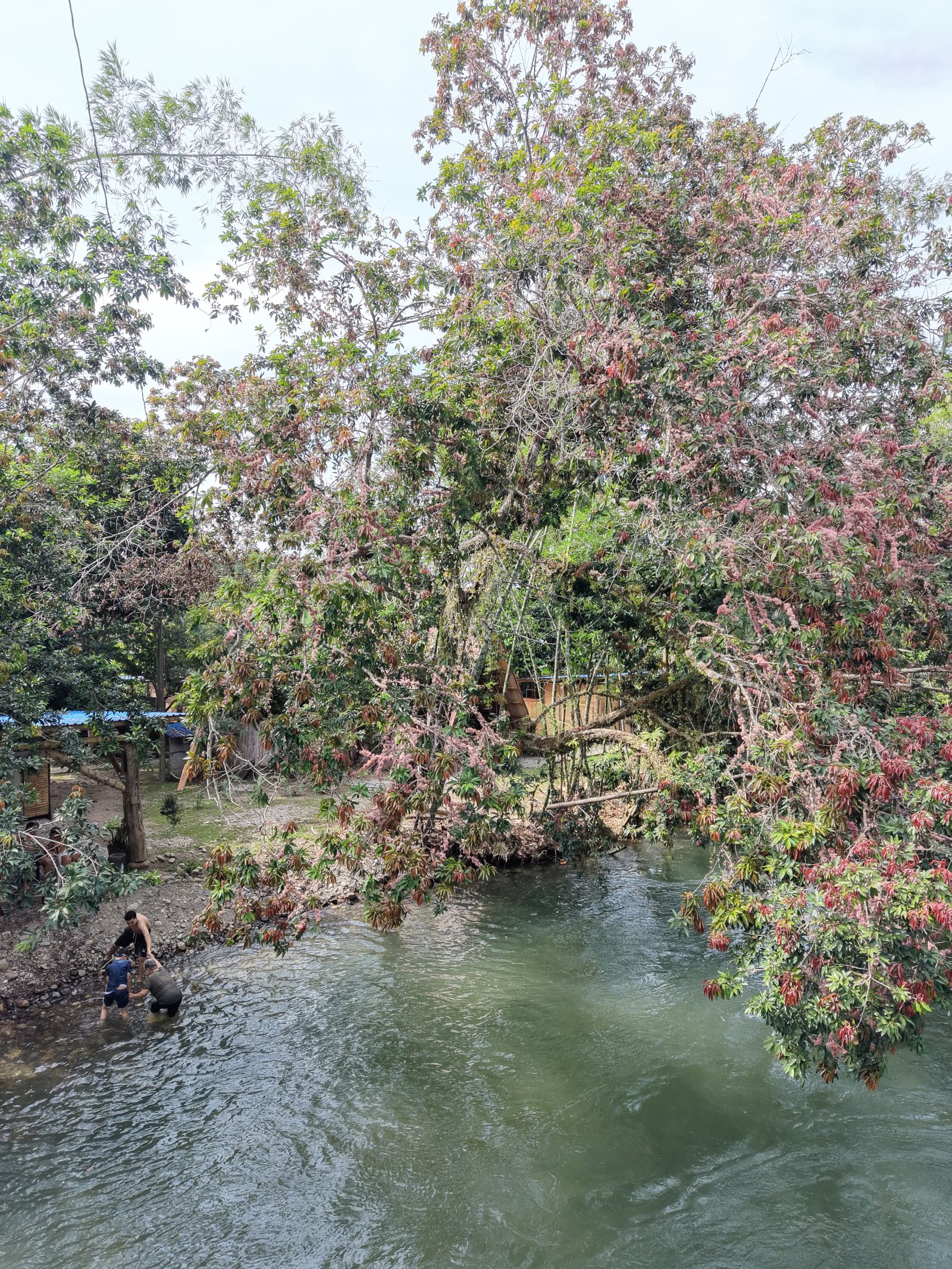
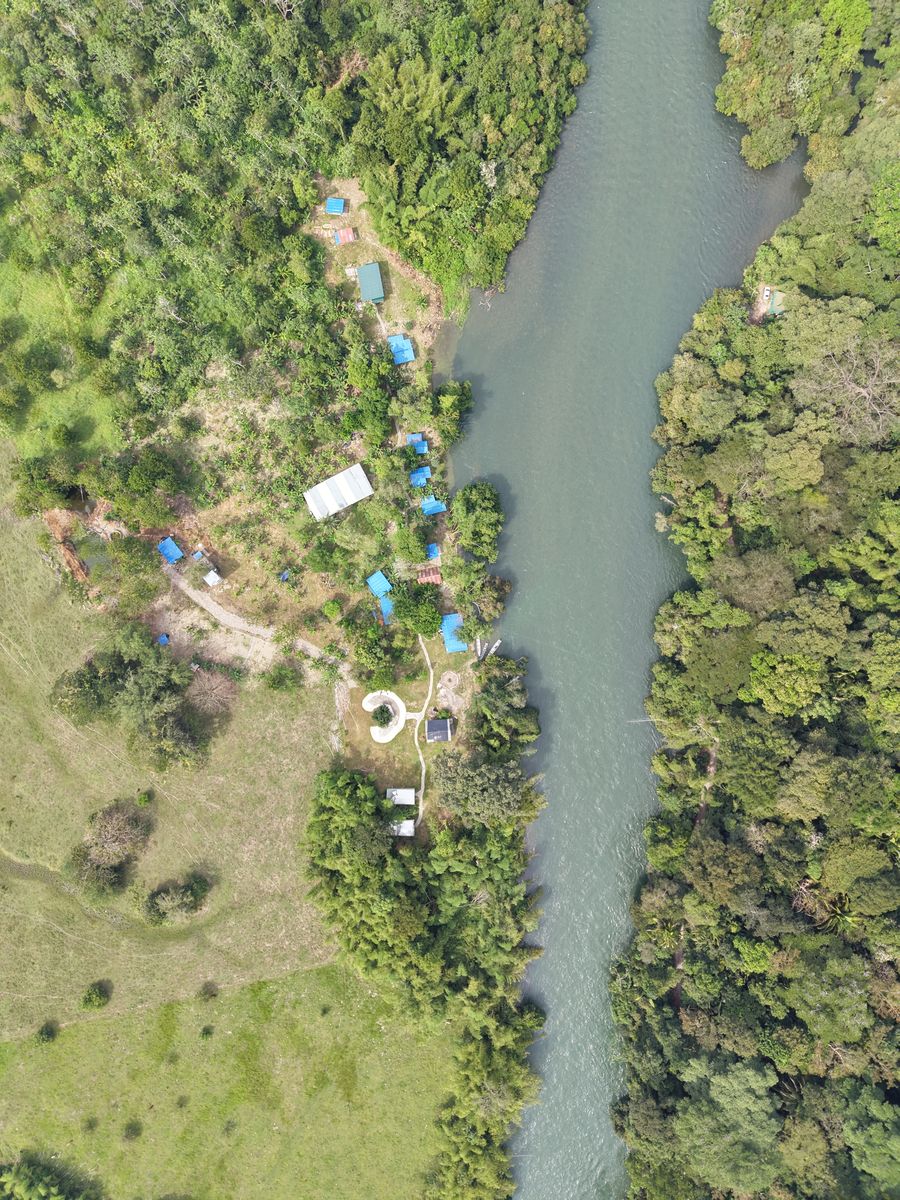
The La Miel River runs wide and green between two walls of forest. Along its banks bamboo grows mixed into the bush, and behind it the hills stack up in layers until they dissolve into haze. On the ecolodge side the land opens into pasture with scattered trees; on the other, the forest comes down to the water unbroken. Mornings arrive with mist on the channel; evenings turn pink.
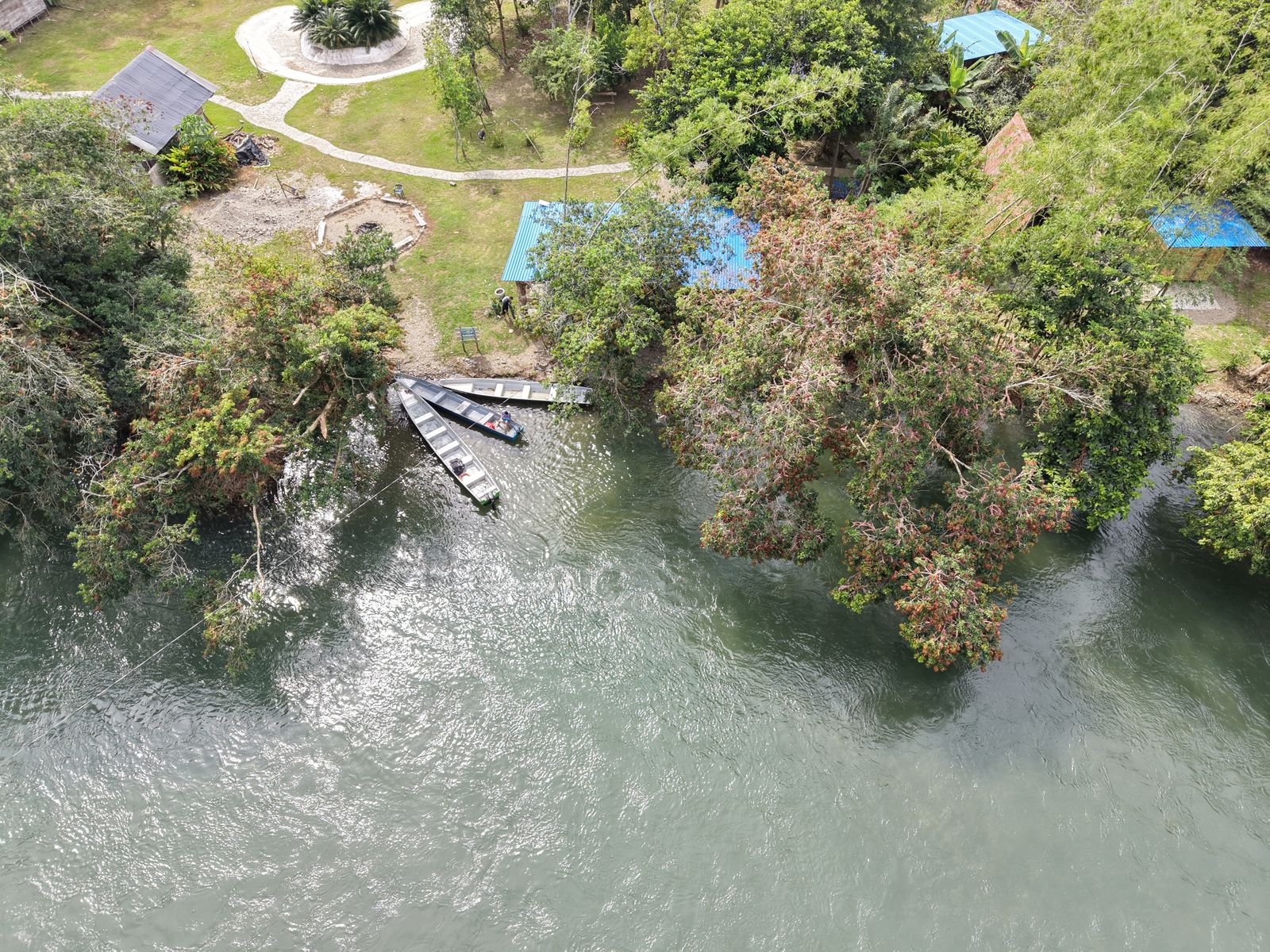
Our own photographs, taken on site by drone.
What you do here
The river is not scenery — it is the plan. These are the outings we run from the ecolodge.
3
We run this one
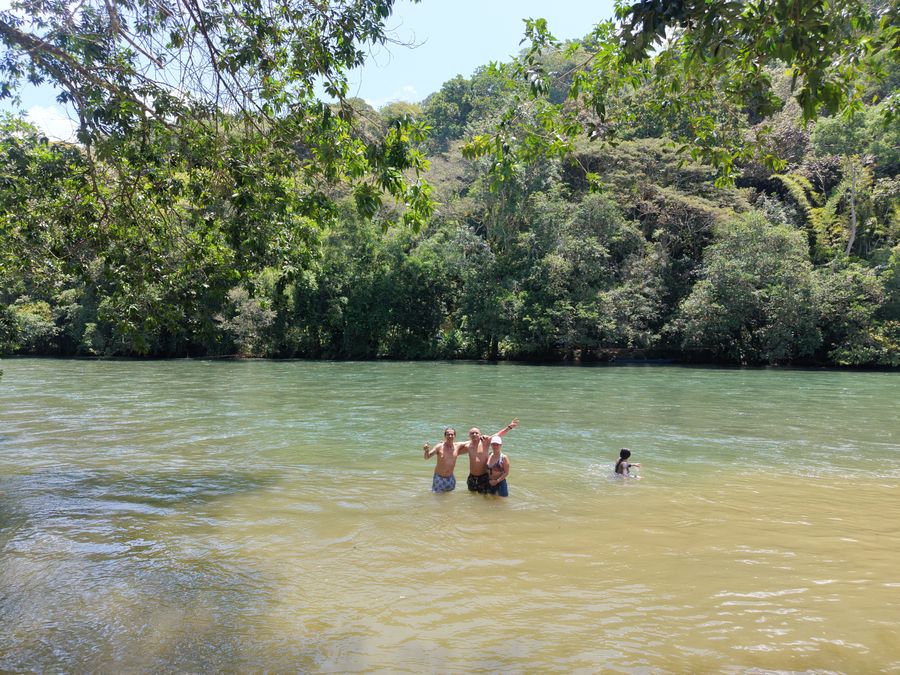
Body rafting on the La Miel River
You get in the river with a life vest and let the water do the work. There is also the inner-tube version — calmer, for those who would rather watch the canyon drift by. It is the one guests ask to repeat.
Upriver the valley narrows and the water squeezes between rock walls: waterfalls dropping straight into the channel, rapids, and a different light filtered through the forest. The wildest and most beautiful stretch.
An enormous ceiba that has stood for over a century. You walk there and you stay a while underneath, which is the whole point: a tree like this watched the river, the people and the years go by, and you feel it.
Where the Manso river hands its water to the La Miel. This is the end of the run: you come out of the water here after floating down, and it is also good for fishing and for birdwatching.
10.0 km as the crow flies
No photographs yet
We run this one
Birdwatching at dawn
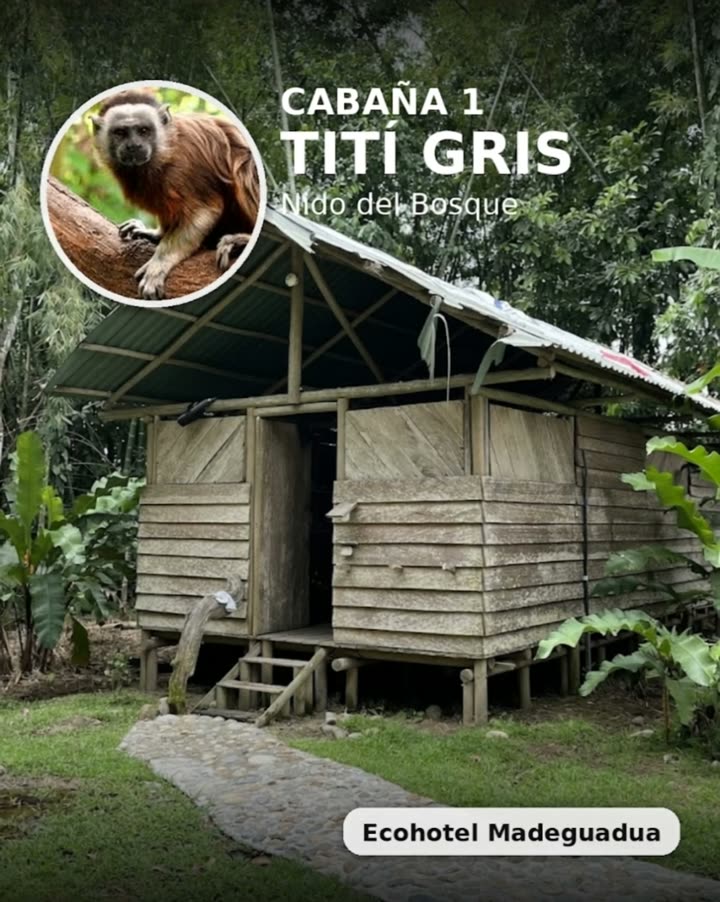
At first light the forest starts up. You head out along the trail and the dock to look for what already has a name here: the grey titi, the motmot, the kingfisher, the heron. Each cabin is named after one of them, so the walk is going to meet them.
The region's largest body of water, dammed on the La Miel river. You go up to the lookout, tour it by boat and fish. The short outing: under an hour by road.
A pool of clear, still water set in the forest, the colour that gives it its name. You swim and you linger; a compulsory stop on the way up to San Diego.
Half day
20.6 km as the crow flies
No photographs yet
We arrange it
San Diego lagoon
A round lagoon in the crater of a dormant volcano — warm green water ringed by dense forest. The big outing of the area, and the farthest.
The other spot on the Manso, on the road to San Diego. You stop at the bridge and walk down to the river — the natural break going up or down.
Half day
18.8 km as the crow flies
No photographs yet
We arrange it
Puente Linda hot springs
Hot springs across the boundary, already in Antioquia. The different outing: not cold mountain river but warm water, which is why it works on a rainy day.
A waterfall tucked into the forest north of the lodge, with a pool below. You walk in, and the walk is the outing: an early start, a packed lunch by the water and back in the afternoon.
An open stretch of river among the forest — the kind you settle into for the whole day: water, stone and shade. The lower stop on the walk up to the falls.
The falls that crown the Las Pavas outing, less than a kilometre upstream. You walk up from the river and come back down for lunch.
Full day
13.2 km as the crow flies
No photographs yet
Disconnect without vanishing
Every cabin has wi-fi and plenty of power outlets, and there is an open-air coworking space facing the river. You can come to do nothing at all, or come to work while watching the water. What you will not find is traffic, horns or neighbours.
What you will find here
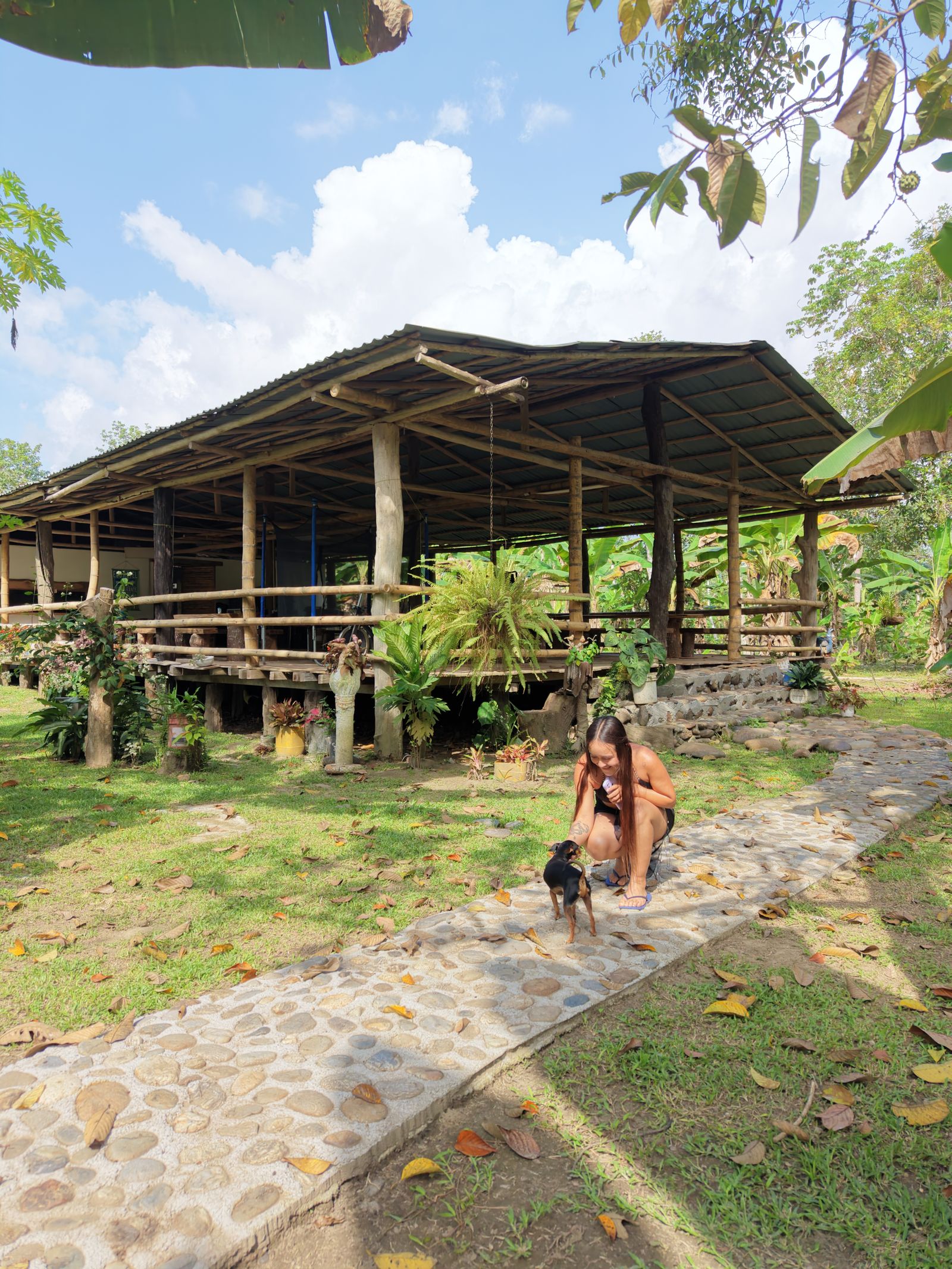
Everything is within walking distance, between your cabin and the river.
Restaurante Oso Perezoso — Comedor del Río
Piscina natural
Coworking Natural Río La Miel — check-in y trabajo
Fogón del Río — zona de fogata
Arena La Miel — cancha de vóley
Sendero del Tití — caminatas y avistamiento
Muelle La Miel — punto de río (ingreso y salidas)
Aljibe de Vida — acueducto propio
Casa Raíz–Lupita — administración
Getting here
Getting here is already part of the trip: the car stays on the opposite bank and the last stretch is made over the water.
Take the Isaza–La Habana road to the landing at vereda La Habana. Parking is on that bank; the ecolodge is straight across the La Miel River, and the crossing is made by boat from the Muelle La Miel dock.
Arrival and departure
Check-in
Whenever you arrive
Check-out
After lunch, until 3:00 p.m.
The boat
06:00–18:30 ·
The boat crosses whenever you arrive.
18:30–06:00 ·
After dark it still crosses — message us on WhatsApp first.
There is no arrival window: the boat crosses whenever you reach the La Habana landing. Message us on WhatsApp with the time you expect to be there — all the more so if you arrive after dark. Bear in mind the rate is per day with all three meals, so arriving in the afternoon leaves that day's breakfast and lunch behind.
Where are you coming from?
View
Tap the map to explore it
Ecolodge network
Imagen satelital: Esri World Imagery · Maxar/Airbus · Datos de vías: (c) colaboradores de OpenStreetMap (ODbL). Ruteo: OSRM.
Nearby spots are not pinned yet; we will show them when you arrive.
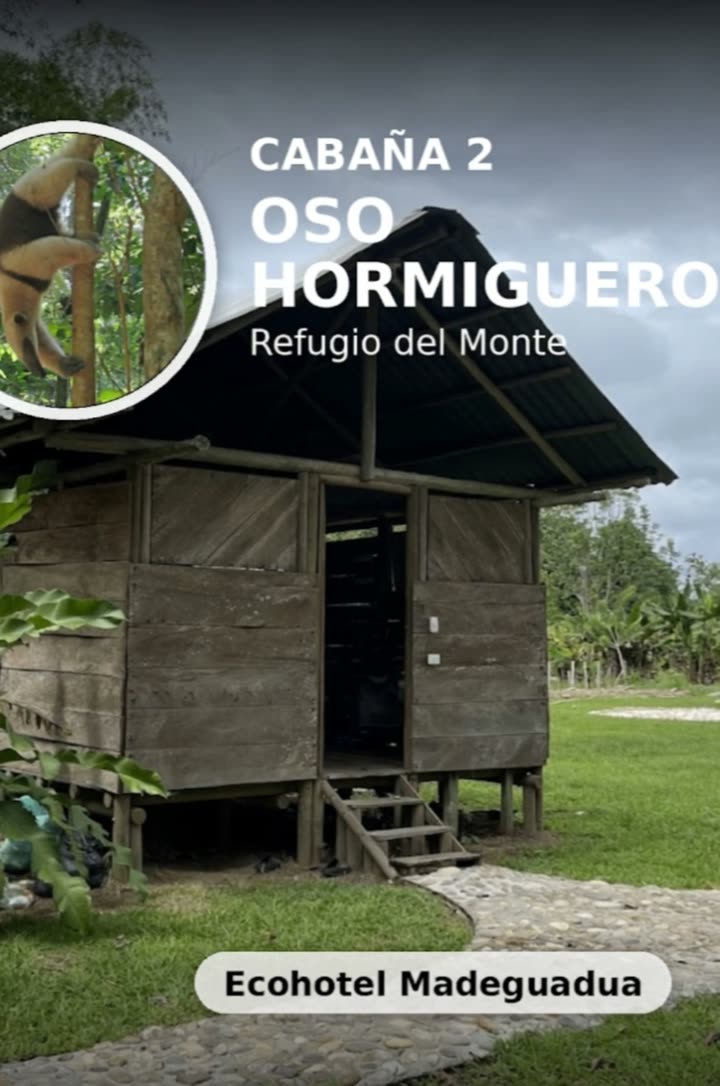
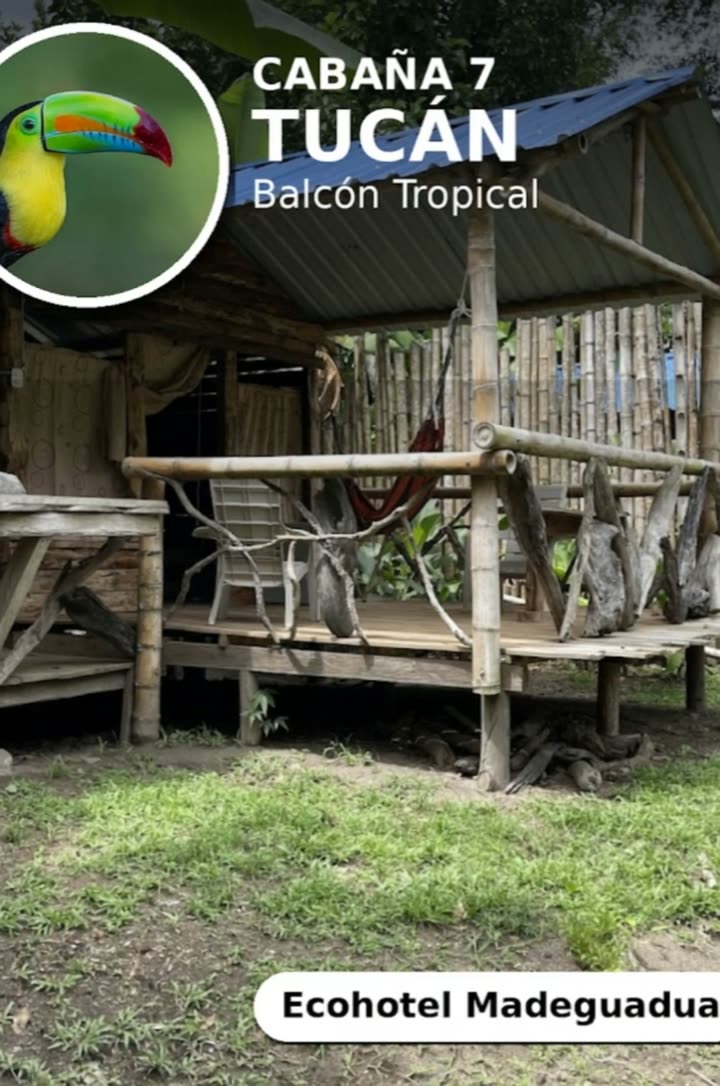
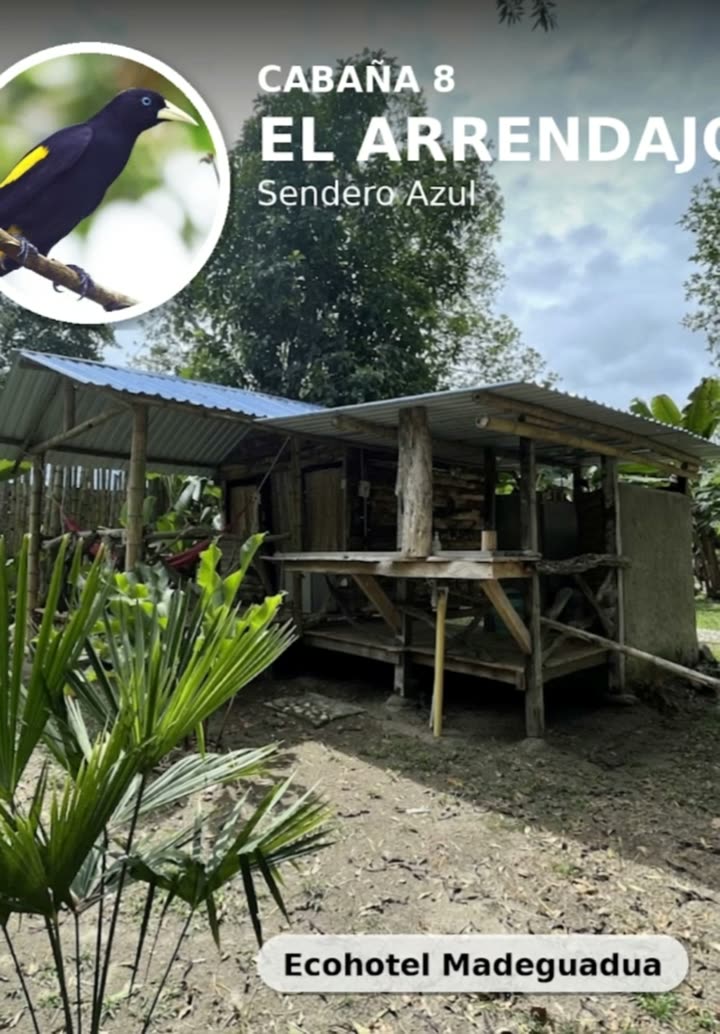
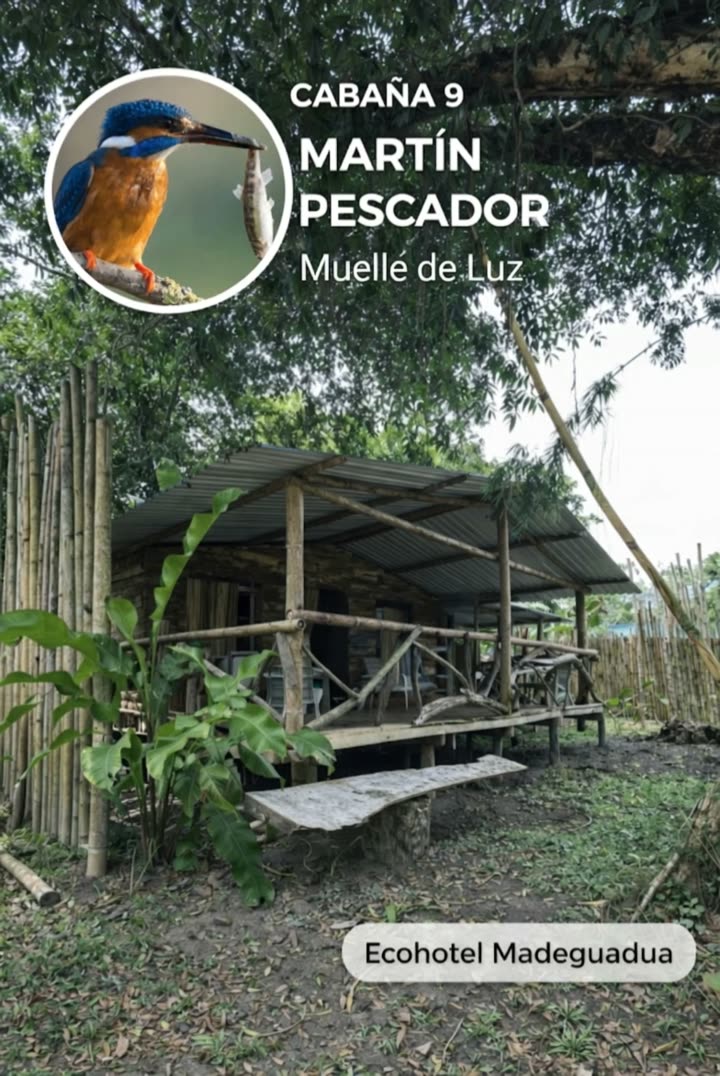
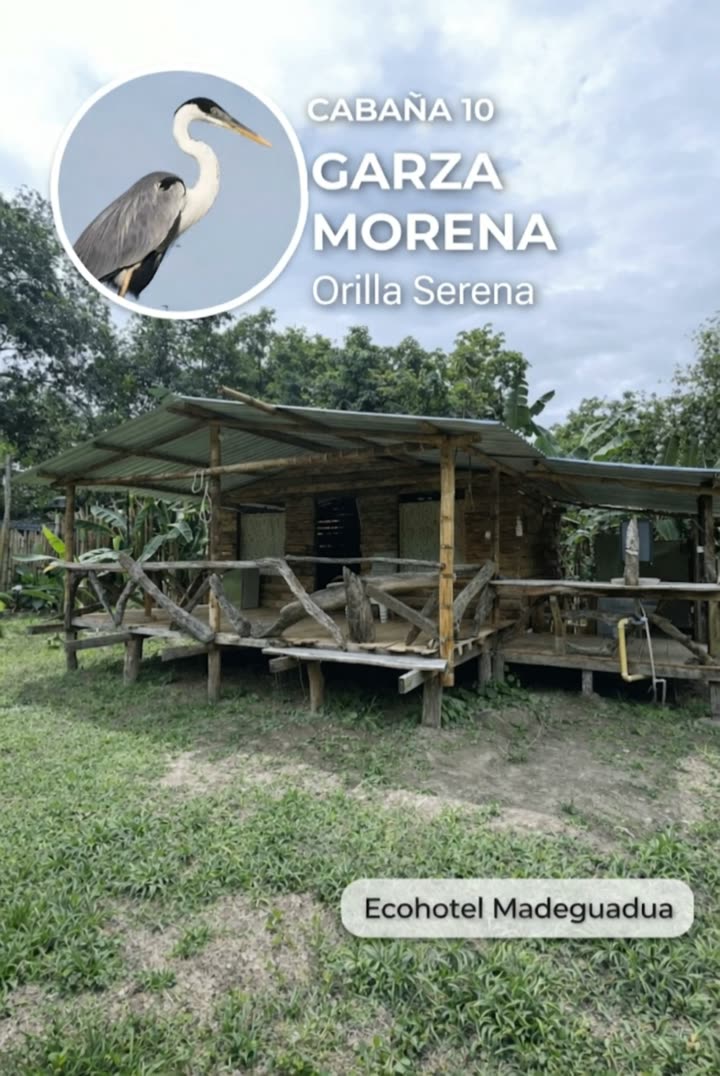
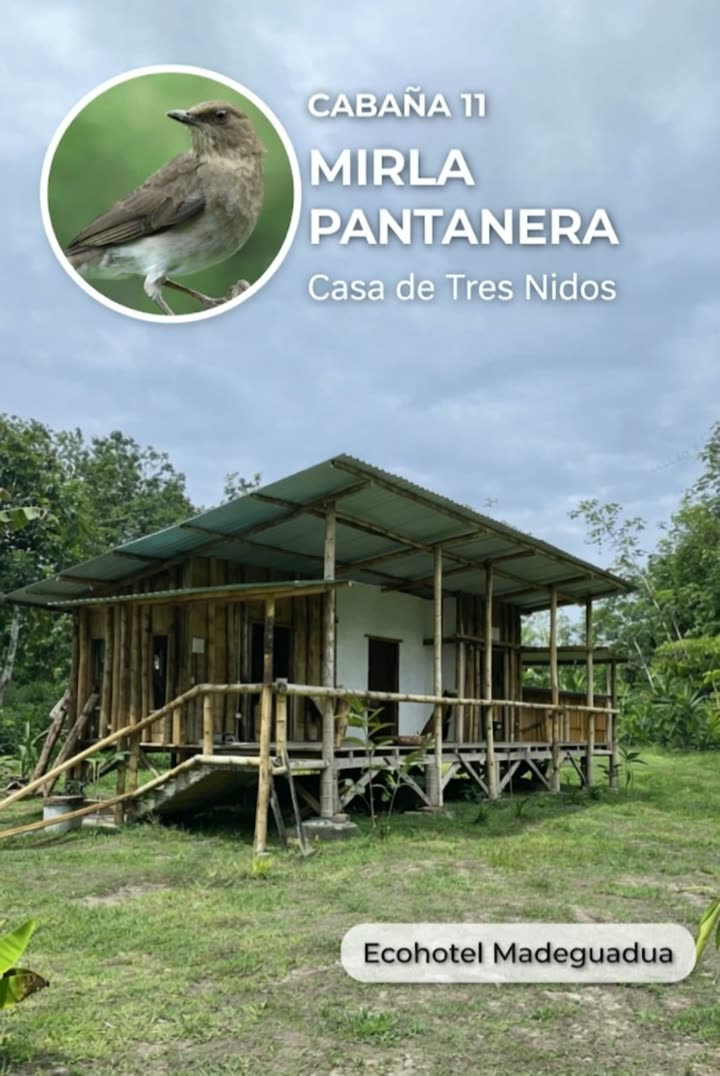
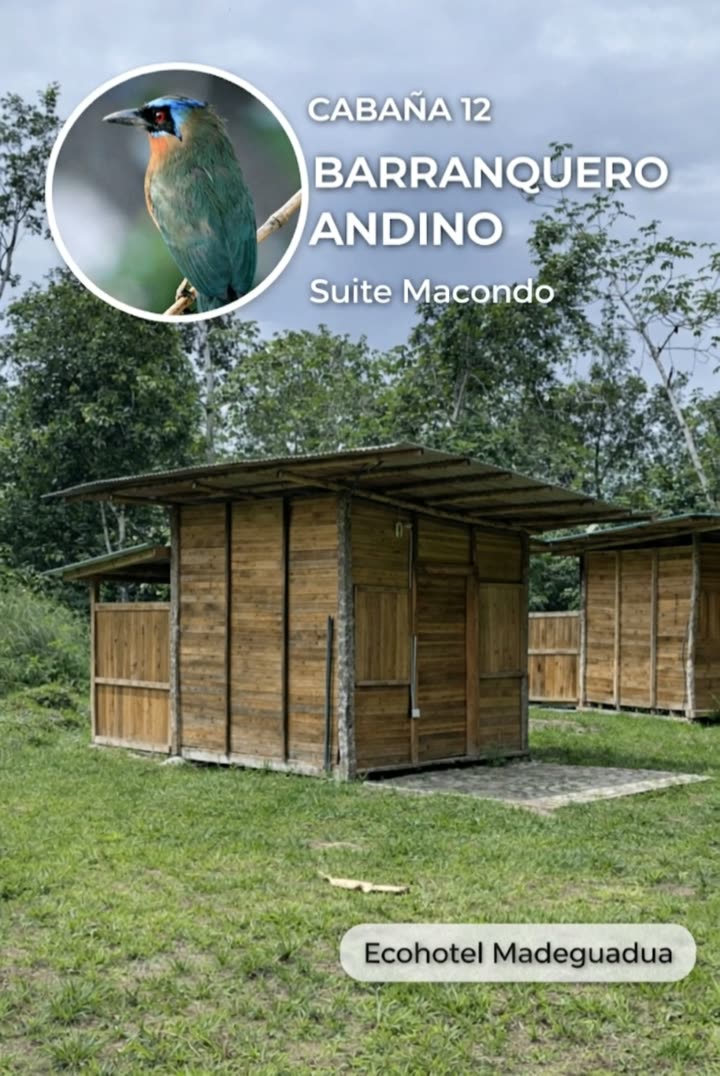
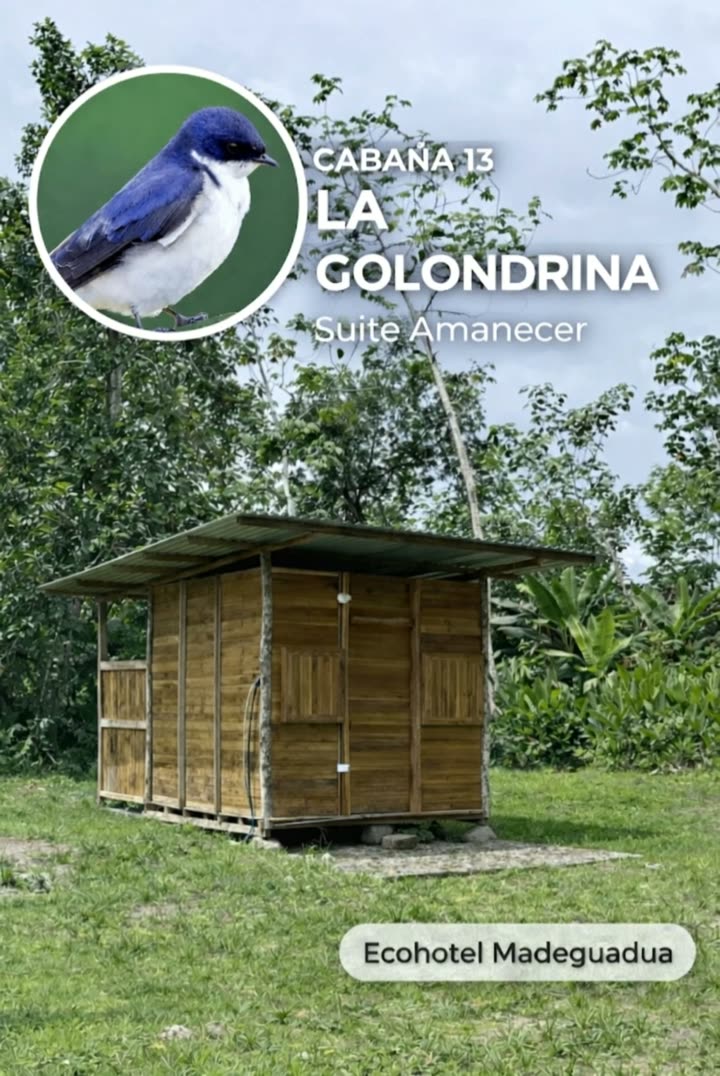
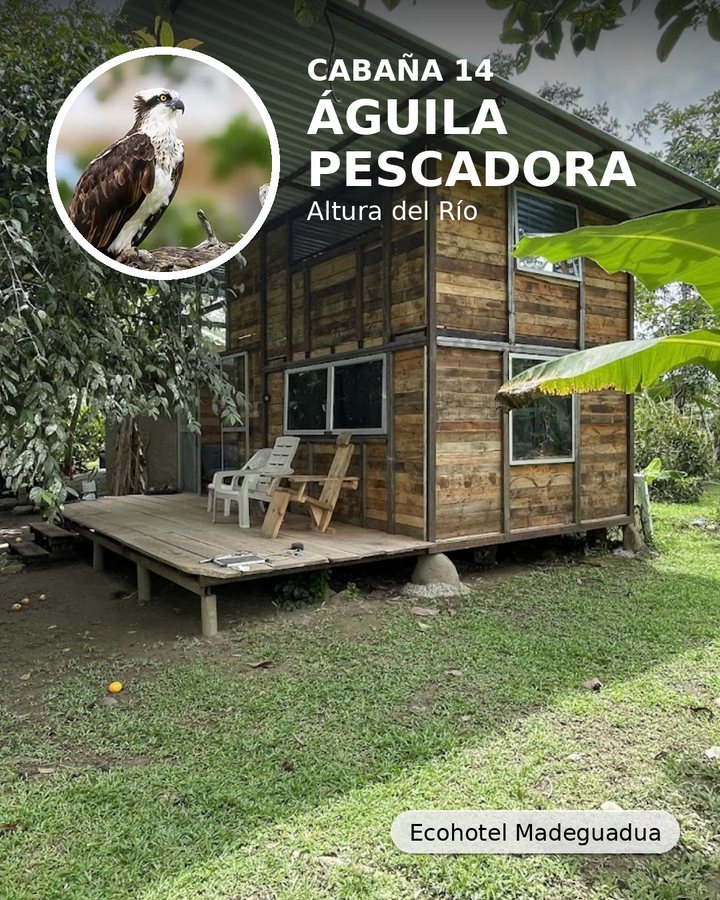
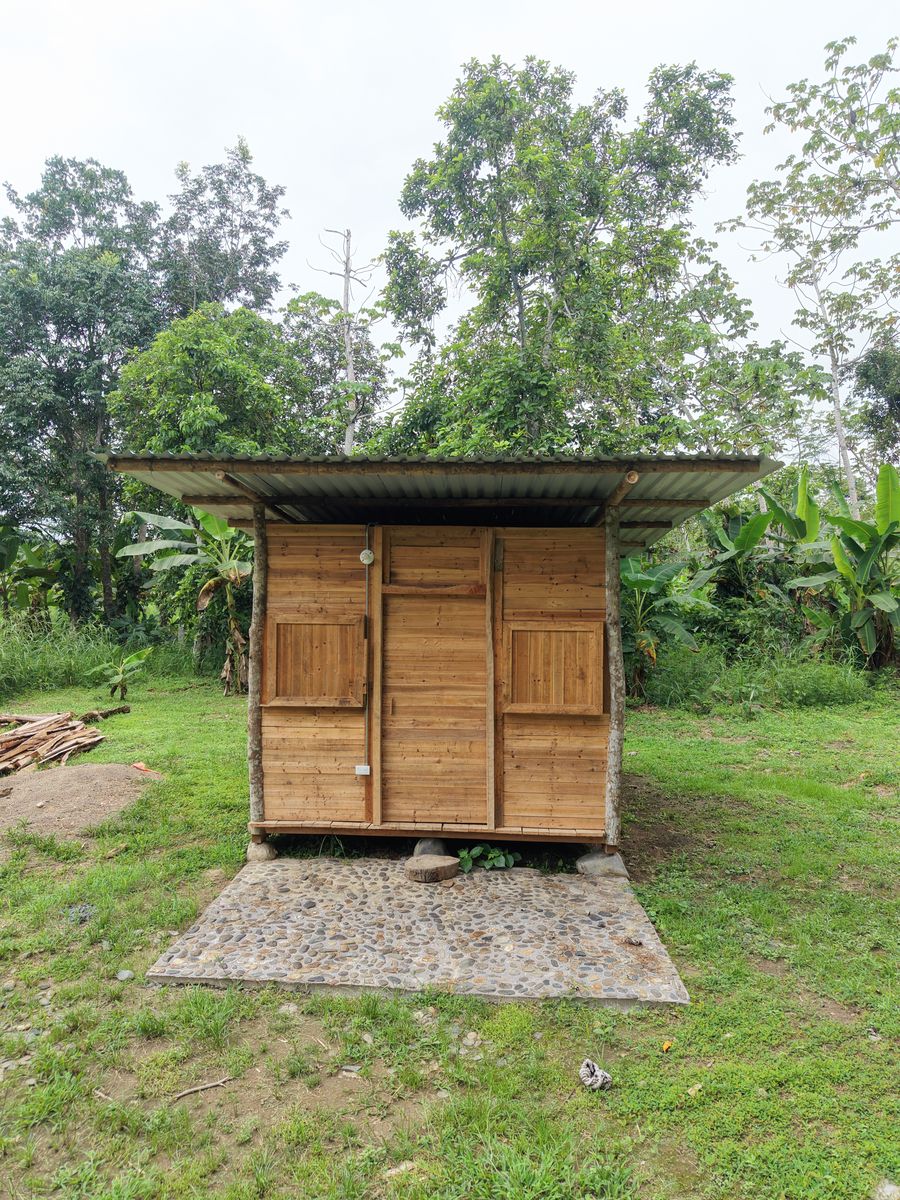
Fourteen of them, in bamboo and timber, each named after an animal of this territory: the grey titi, the motmot, the kingfisher. They are rustic and well kept — the luxury here is the river. Some sleep two, some sleep nine.